

If you’re going through a divorce in Florida and need to understand how property like your home, retirement accounts, or debts will be handled, you’re in the right place. In this guide, we’ll walk you through how Florida courts divide property, what counts as marital versus non-marital assets, who might keep the house, and how debts and retirement accounts are addressed. This article is designed to give you a clear understanding of your rights and what to expect, especially if you’re in Tampa, Florida. At Hunter Law, our experienced legal team has helped countless clients protect what matters most during the divorce process. If you’re unsure about where you stand or what steps to take, contact Hunter Law today for a confidential consultation.
What to Know About Property Division in a Florida Divorce
Our Tampa divorce law services cover all aspects of family law, including property division. When it comes to divorce in Florida, property division is not about splitting everything 50/50. Florida uses a system called equitable distribution, which means the court aims to divide marital assets and debts in a manner that is fair, not necessarily equal. This system applies to all couples going through a divorce in Florida, including those in the Tampa area.
Courts look at each case individually. They consider factors such as the length of the marriage, financial contributions, and each spouse’s economic circumstances. This individualized approach ensures that the division reflects the unique circumstances of the marriage. To learn more about how these decisions may relate to support, visit our page on how alimony is determined in Florida.
What Is Marital Property and What Isn’t?
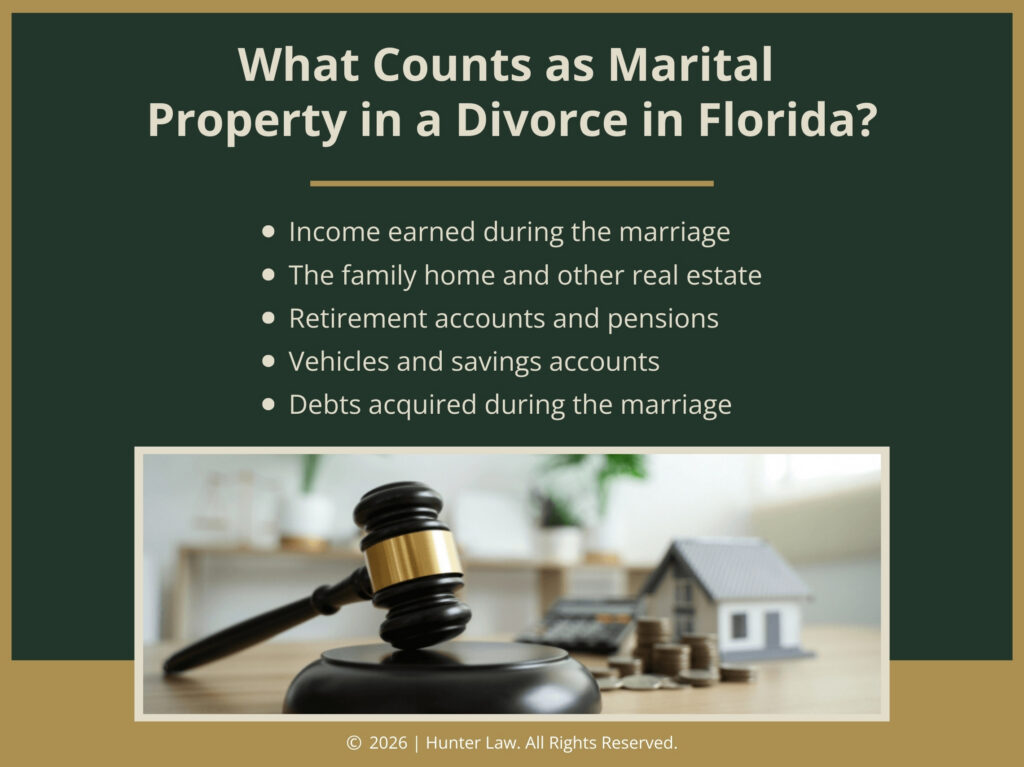
Understanding what constitutes marital property is crucial for determining what the court may divide between the parties. Marital property typically includes income, real estate, vehicles, savings, and other assets acquired during the marriage. It also includes debts acquired during the marriage.
On the other hand, non-marital property usually refers to assets one spouse owned before the marriage or received as a gift or inheritance during the marriage. However, if non-marital assets are mixed with marital funds, they may be considered marital property as well. This is referred to as ‘commingling,’ and this distinction plays a big role in splitting assets and debts in divorce. ‘Commingling’ can significantly affect how the court distributes personal assets.
Who Gets the House in a Florida Divorce?
The question of who gets the house in a Florida divorce often brings tension. Courts in Florida look at several things (including how a prenup affects property division):
- Was the home purchased during the marriage?
- Are both spouses on the title or mortgage?
- Is there a minor child living in the home?
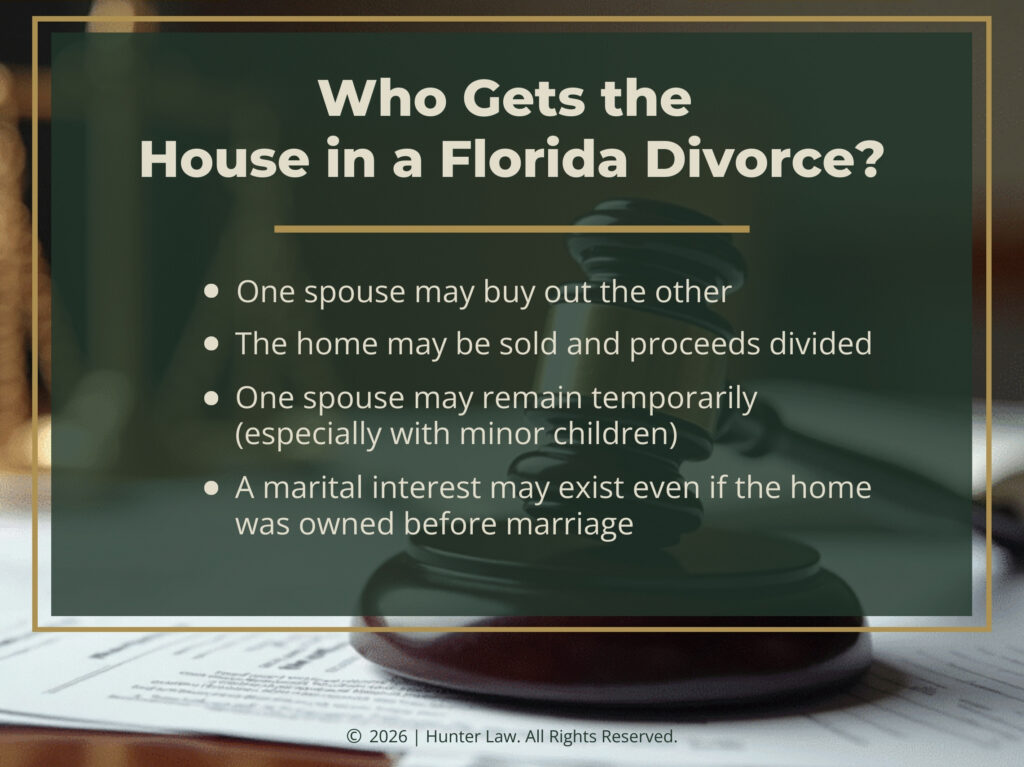
Options include one spouse buying out the other, selling the home and splitting the proceeds, or allowing one spouse to remain in the home for a specified period. When dividing real estate in divorce, the court aims to ensure the arrangement is fair for both parties.
If the house was acquired prior to the marriage, but payments were made on the mortgage during the marriage, then the spouse may have acquired a ‘marital interest’ in what would otherwise be non-marital property. This can be quite complex.
What Happens to Retirement Accounts and Pensions?
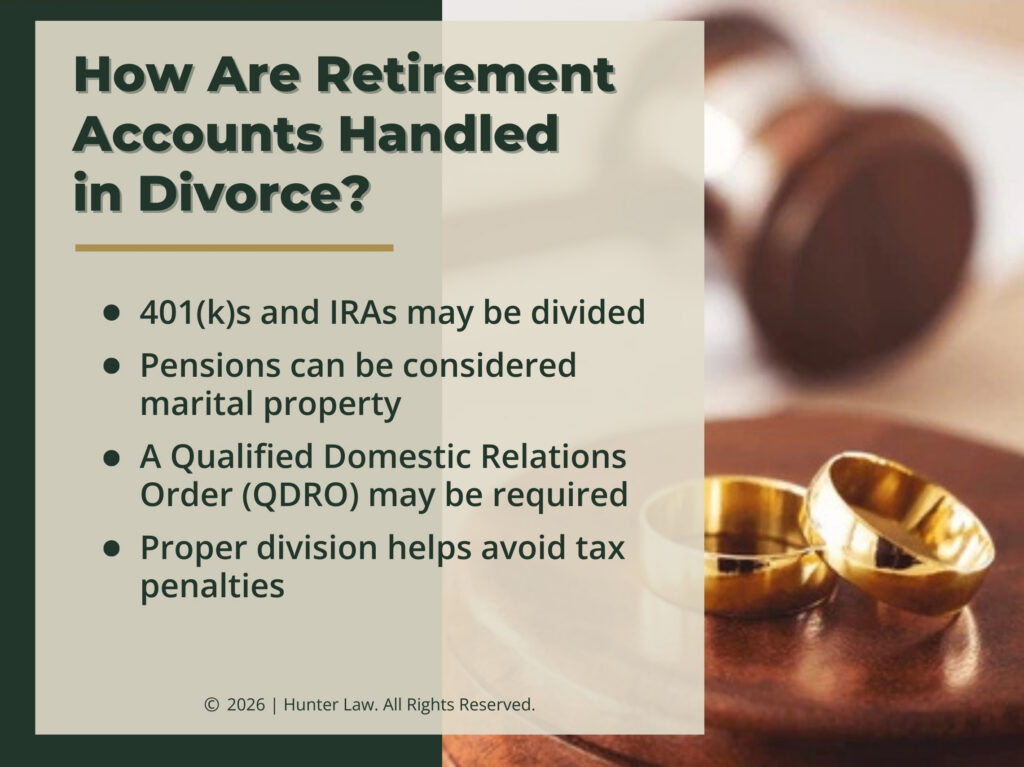
Many people are surprised to learn that retirement accounts in divorce are considered marital property (especially if you’re protecting your business in a divorce or have joint investments) if contributions were made during the marriage. This includes pensions, 401(k)s, and IRAs.
To divide these accounts correctly and avoid tax penalties, courts issue something called a Qualified Domestic Relations Order (QDRO). Because dividing retirement assets can be complex, it’s a good idea to work with one of the top divorce lawyers in Tampa who understands the process and ensures nothing is overlooked.
How Are Debts Divided During a Divorce in Florida?
Florida courts treat debt in the same manner as they do assets in a divorce in Florida. That means any debt accumulated during the marriage, whether through credit cards, car loans, student loans, or medical bills, is usually shared equally between the spouses.
The court also may consider:
- Whether the debt is in one or both names
- If the debt was used for the benefit of the household
- Whether one spouse incurred the debt irresponsibly or in secret
These considerations help ensure fairness when splitting debt in divorce cases. In addition, to understand how custody might influence asset decisions, you can learn more about child support during divorce.
What Factors Influence the Court’s Decision?
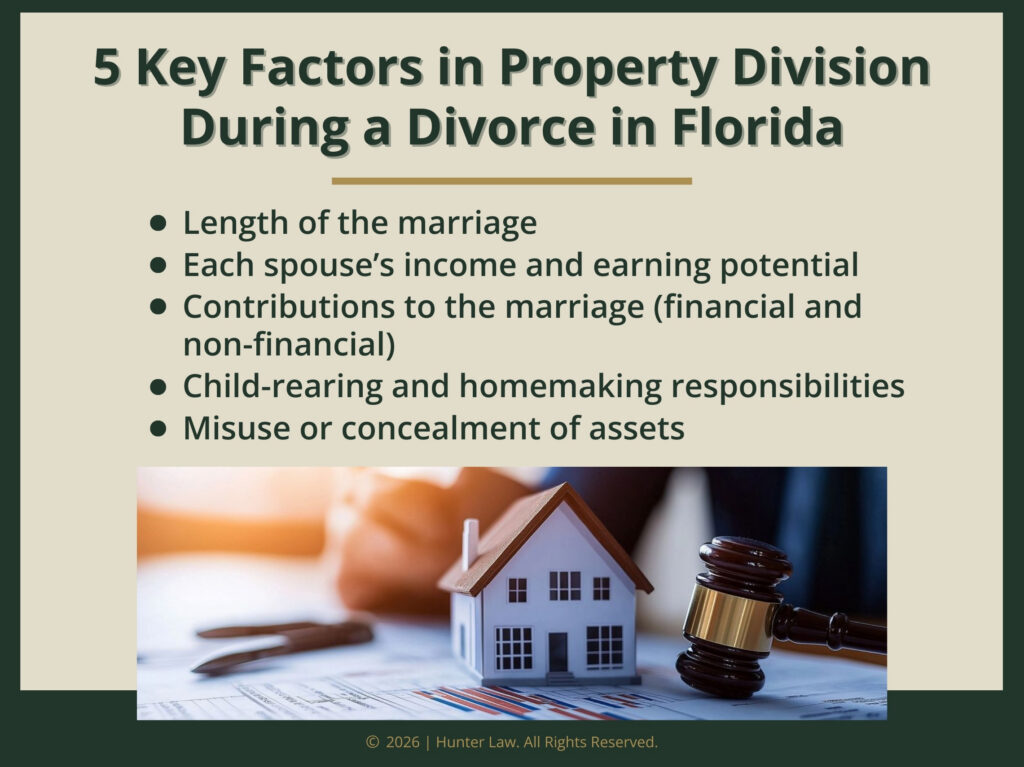
No two cases of divorce in Florida are the same, which is why Florida courts examine several details before dividing property:
- Length of the marriage
- Each spouse’s income and earning potential
- Contributions to the marriage (financial or otherwise)
- Child-rearing or homemaking responsibilities
- Misuse or hiding of assets
Full financial disclosure is required for a fair court decision. Choosing the best divorce lawyer ensures all facts are presented clearly.
Contested vs. Uncontested Divorce in Florida: What to Choose
Can You Avoid Letting the Court Decide?
Yes. Couples can agree on how to divide property without letting a judge decide. This can be done through:
- Mediation
- Negotiation between attorneys
- Collaborative divorce
These options give spouses more control, reduce conflict, and often cost less than going to trial. A skilled divorce law firm in Tampa can help structure a custom agreement that works for both sides.
Work with a Top Divorce Lawyer in Tampa
Dividing property during a divorce in Florida can affect your financial stability for years. At Hunter Law, we help clients across Tampa, Florida, navigate the legal system, protect their rights, and secure what they’re entitled to under Florida law. Our experience with Florida property division laws enables us to guide you through every step of the process with clarity and confidence.
Whether it’s the family home, retirement accounts, or shared debt, our team brings the experience and insight needed to guide you through this process. Contact Hunter Law today to speak with a Tampa divorce attorney who prioritizes your interests with focused advocacy.