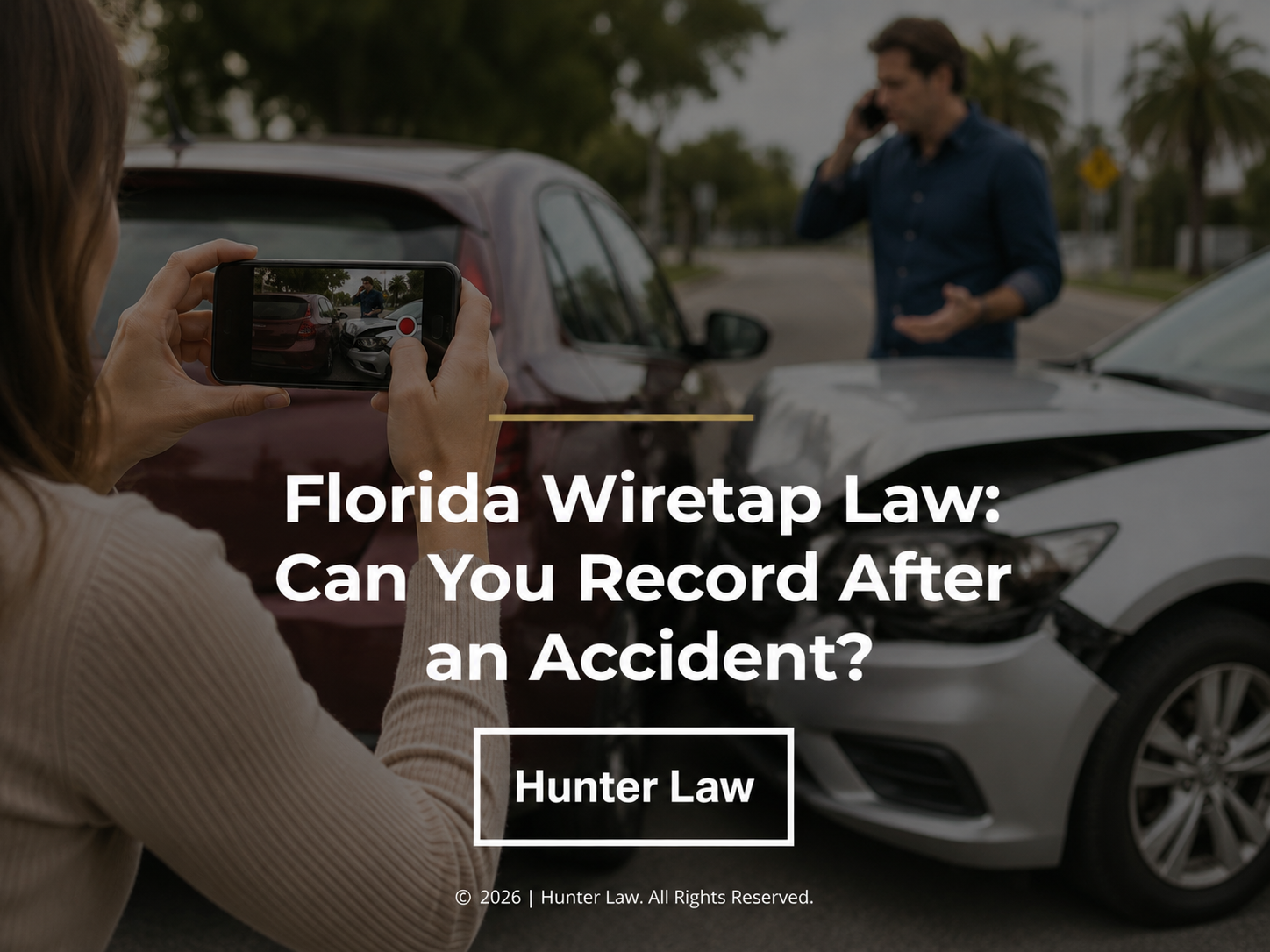
Yes, you can usually record after a car accident in Florida. Most crashes occur in public places like roads, intersections, and parking lots, where there is no expectation of privacy. As a result, recording video and audio at an accident scene is generally allowed under Florida wiretap law.
If you’re in Tampa, Florida, the same practical rule applies: a public setting means you can typically record what’s happening. The only time you need to be careful is when a situation becomes private. If you have questions about your rights after an accident, the team at Hunter Law can guide you through what to do next. Reach out today for clear, practical advice. Here’s how it works in real life.
Is It Legal to Record at an Accident Scene in Florida?
In most cases, it is legal to record an accident scene in Florida.
People often ask, “Is Florida a one-party consent state?” Florida is a two-party consent state, but that rule applies to private conversations. At a crash scene, you are almost always outside, in a public place, so the consent rule usually does not apply.
In plain terms: if you’re standing on a roadside, sidewalk, intersection, or parking lot, you can generally record both video and audio of what’s happening around you.
Why Recording Is Usually Allowed in Public
The key idea behind the Florida wiretap law is simple: public place = no expectation of privacy. You can review the official Florida wiretap law here: Florida wiretap law statute.
After a car accident, people are typically gathered in open areas where others can see and hear what’s happening. Because of that, the law does not treat those conversations as private.
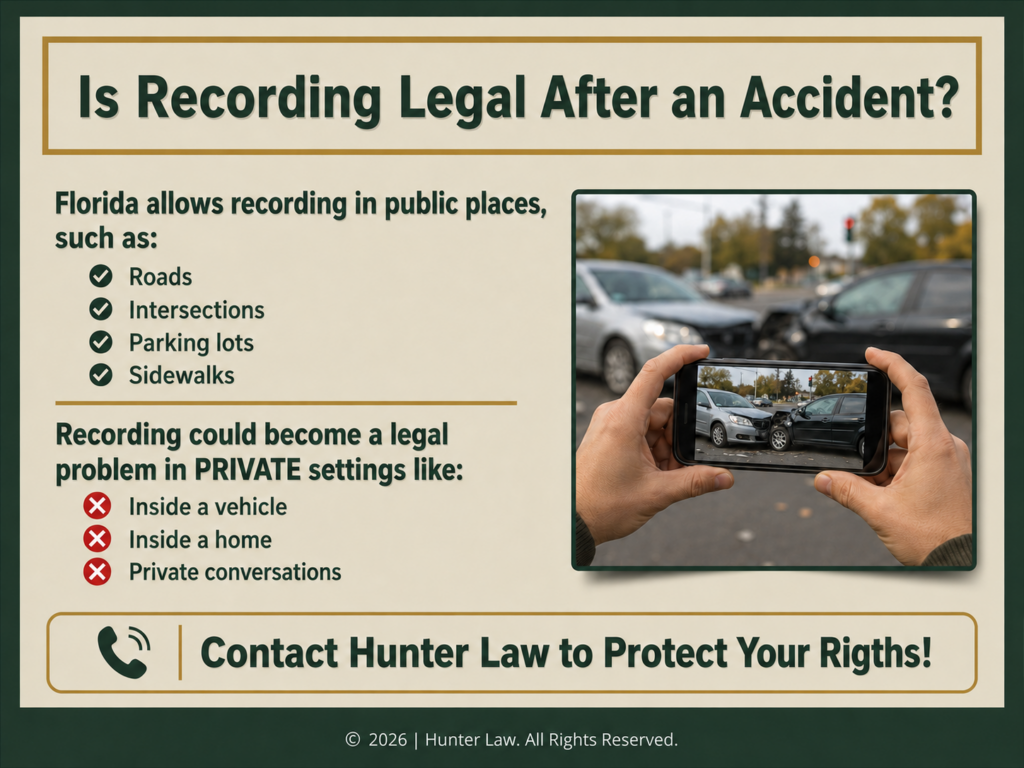
Common public settings include:
- Roadside after a crash
- Busy intersections
- Parking lots
- Sidewalks
In these situations, recording is usually allowed. This includes:
- Filming vehicle damage
- Capturing driver behavior
- Recording what is said openly at the scene
- Documenting traffic conditions and road layout
Florida video recording laws generally allow recording in public areas, and in the context of an accident scene, that includes audio when there is no expectation of privacy. For a deeper look at how recording laws apply, see: is it legal to record a conversation in Florida? If you need help understanding how this applies to your situation, Hunter Law can provide clear guidance on your next steps.
When Recording Could Become a Legal Problem
Problems only come up when a situation becomes private.
This can come up in rideshare situations with multiple parties involved. If your crash involved a rideshare, see: Uber and Lyft accident claims.
Examples of more private settings include:
- Inside someone’s vehicle
- Inside a home or private room
- A secluded area where a conversation is clearly intended to be private
For example, if you step inside another driver’s car and record a conversation, that could create an expectation of privacy. In that case, consent may be required.
These situations are not common in typical accident scenes. Most crashes remain in public view, where recording is allowed. The rule is simple:
- Out in public → recording is generally allowed
- In a private setting → get consent before recording
What You Should Record After a Car Accident
If you’re involved in a crash, recording the scene can protect you and support your injury claim.
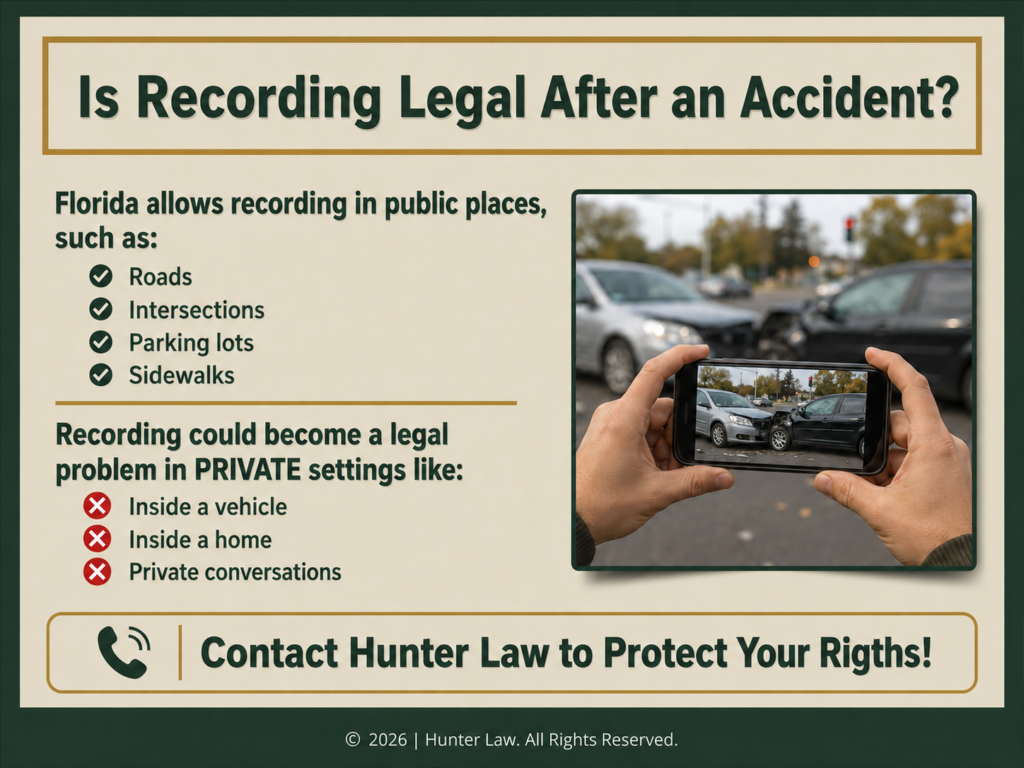
Focus on capturing useful evidence such as:
- Vehicle damage from multiple angles
- License plates
- Road conditions (wet pavement, debris, skid marks)
- Traffic lights and signs
- The position of vehicles
- Weather and visibility
- Statements made openly by drivers or witnesses
This kind of car accident evidence helps show exactly what happened and can prevent disputes later. Recording also preserves details that are easy to forget once the situation settles down, and using it correctly under Florida wiretap law can strengthen your case. For a full checklist, see: what to do right after an auto accident.
Can a Recording Help Your Injury Claim?
Yes, recordings can make a real difference in a personal injury claim.
In more complex cases, such as commercial vehicle collisions, proper evidence handling matters even more. Learn more about truck accident cases.
Photos and videos can:
- Support your version of events
- Help establish fault
- Show the severity of the crash
- Capture behavior right after the accident
Even though recording is usually allowed, what you do with that footage matters. Posting videos online or sharing them publicly can hurt your case. Insurance companies may use your own content against you.
The safest approach is to keep recordings private and share them only with your attorney. You should also understand how online activity can impact your case: how social media can affect a personal injury lawsuit.
When to Speak With a Florida Car Accident Lawyer
If you’ve been injured in a crash in Tampa, Florida, it’s smart to speak with a Tampa accident attorney as soon as possible, especially if there are injuries or disputes about fault.
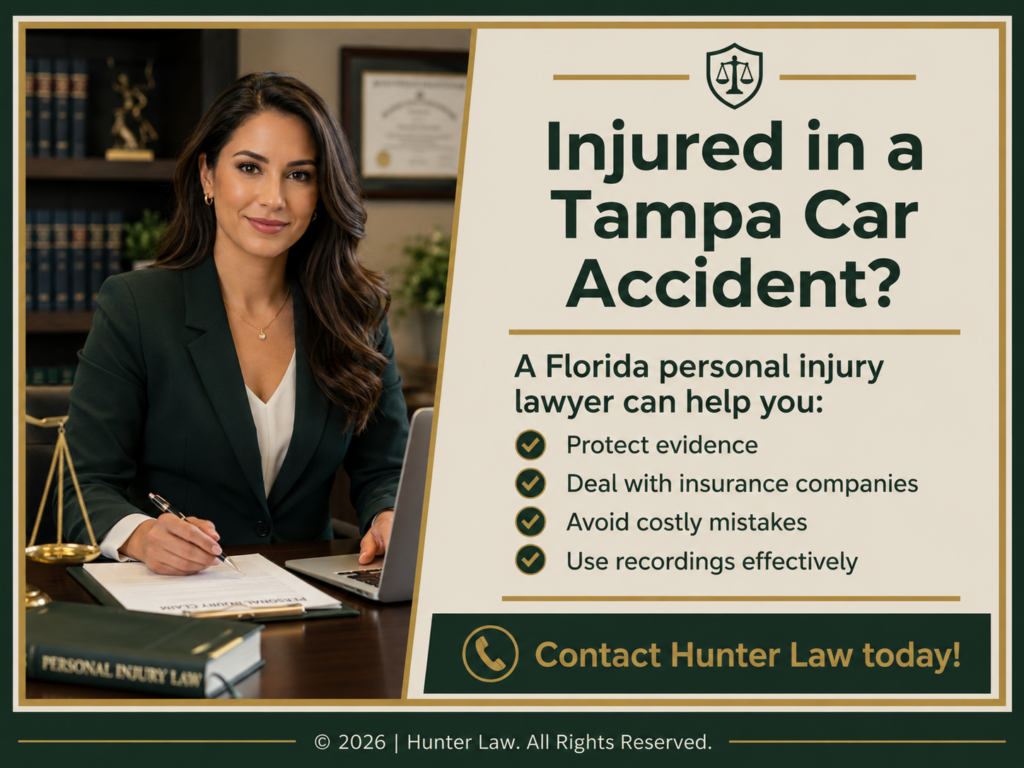
A Florida personal injury lawyer can help you:
- Understand what evidence to keep
- Avoid mistakes that could weaken your claim
- Handle insurance companies
- Use recordings effectively to support your case
At Hunter Law, we guide clients through every step after an accident so they can protect their rights and move forward with confidence.
Final Takeaway on Florida Wiretap Law After an Accident
In most cases, Florida wiretap law allows you to record after a car accident because the scene is in a public place. That means there is usually no expectation of privacy, and recording audio and video is generally allowed.
Just remember the one exception: if the situation becomes private, get consent before recording.
If you’re unsure what to do after a crash, speak with a Florida personal injury lawyer at Hunter Law for clear guidance and next steps. Contact our team today to protect your rights and your claim.