


Fathers often get the short end of the legal stick in Florida child support battles. Sometimes, they are required to pay more child support than they should, given how much time they spend with their children. In other situations, they may not have established their ‘paternity’ of the children, and not get to see their kids. Fathers’ rights in Florida can be complicated.
If you’re a divorced or unmarried father, you need to know how to prepare and negotiate for your rights. Read on to learn everything you need to know about Tampa fathers’ parental rights battles.
Fathers’ Parental Rights in Florida – An Overview
Florida reserves distinct rights for proven fathers of children regardless of whether they are married or unmarried. However, things can get tricky if the father is not married to the mother or when he and the mother of his children get divorced.
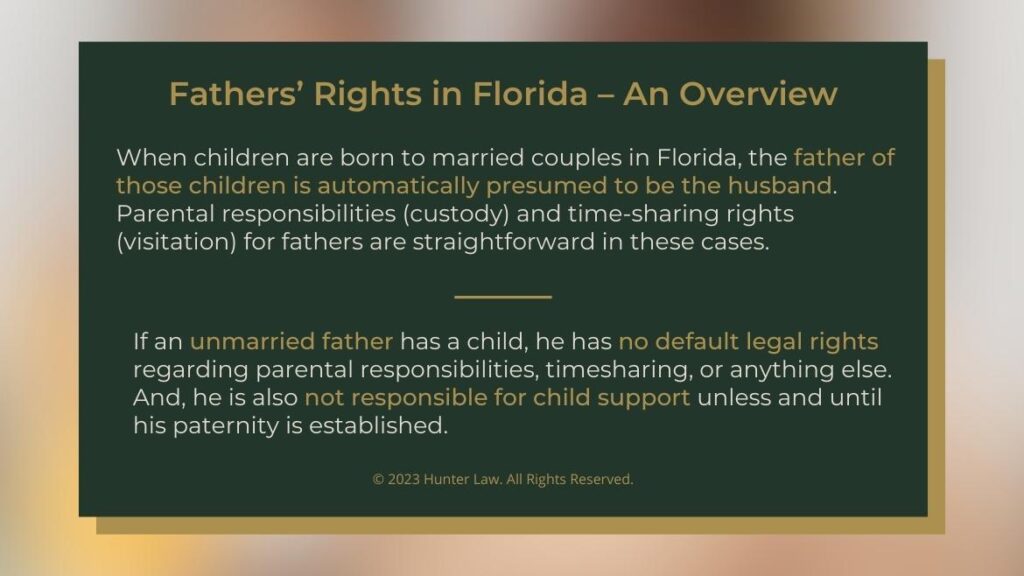
When children are born to married couples in Florida, the father of those children is automatically presumed to be the husband. “Parental responsibilities” (what other states refer to as “child custody”) and “timesharing rights” (what other states refer to as “visitation”) for fathers are straightforward in these cases—divorced fathers get to see their kids and share parental responsibilities.
But if an unmarried father has a child, he has no default legal rights regarding parental responsibilities, timesharing, or any other matters. And, he is also not responsible for child support unless and until his paternity is established.
Child Support Obligations for Tampa, Florida, Fathers
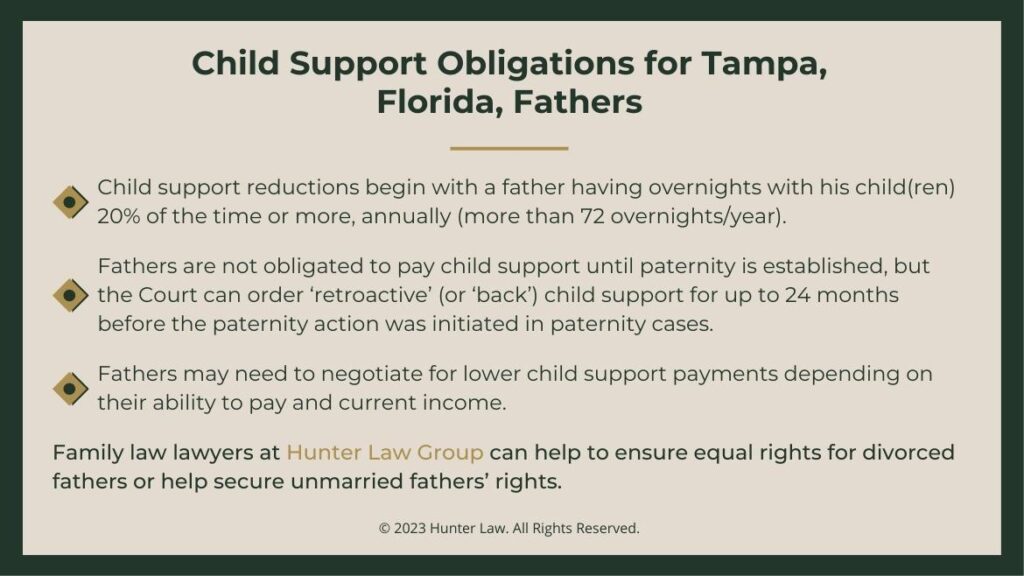
Long-established Florida statutes calculate child support for divorced or unmarried fathers based on how often a father has “overnights” with his child(ren). Child support adjustments (reductions in how much a father must pay) typically begin when a father has overnights with his children at a rate of 20% or more of the time annually (more than 72 overnights each year).
Remember, however, that fathers are not obligated to pay child support until paternity is established (but the Court can order ‘retroactive’ (or ‘back’) child support for up to 24 months before the paternity action was initiated when ordering child support in paternity cases). Furthermore, fathers may need to negotiate for lower child support payments depending on their ability to pay and current income.
Family law lawyers can assist in these cases, as it may appear to a layperson that courts side with mothers in such legal instances. Family law lawyers in Florida can help ensure divorced fathers’ rights or help unmarried fathers secure their rights.
Benefits of Establishing Paternity
There are many benefits to establishing your paternity for your children. For example:
- You’ll get parental and timesharing rights, enabling you to see and care for your children some of the time
- You’ll guarantee that your children receive child support, Social Security benefits, inheritance rights, your health insurance coverage, and other major financial support
- You’ll get access to important information about your children, including medical and school records.
- You’ll have certain rights and responsibilities for your children
Because of all these factors, unmarried or divorced Tampa fathers often seek to establish paternity over their children as quickly as possible. However, this can be a challenging legal struggle if the father is not prepared.
How to Prepare for Fathers’ Rights Negotiations in Florida
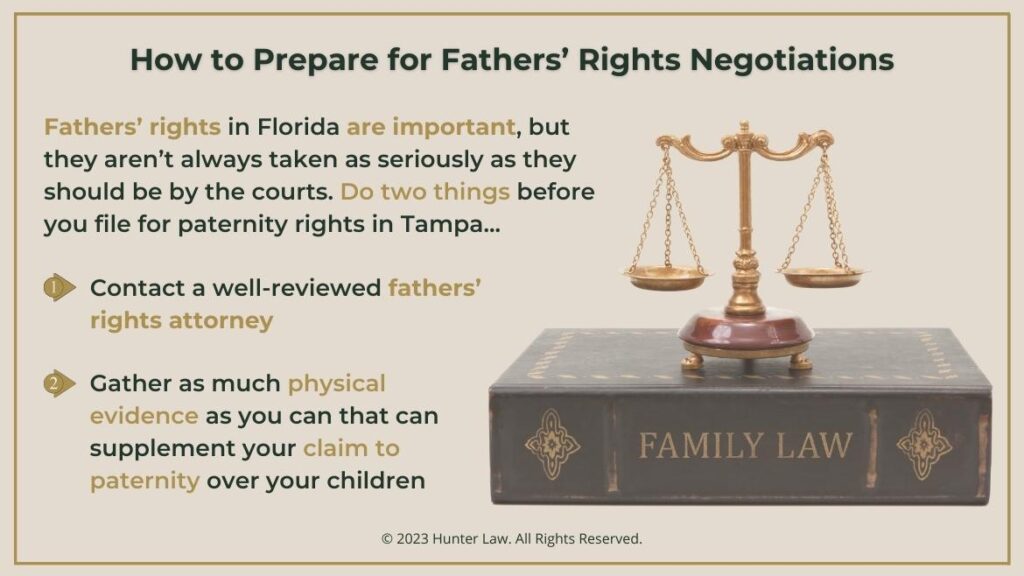
Fathers’ rights in Florida are important, but they aren’t always taken as seriously as they should be by the courts. There are two things you need to do before you file for paternity rights in Tampa or beyond.
Contact Knowledgeable Lawyers
First, contact a well-reviewed Florida fathers’ rights attorney. Fathers’ rights lawyers can break down your legal options and explain exactly what you should expect from the upcoming rights petition. They’ll also be able to represent you in court if necessary.
Gather Evidence
Next, try to gather as much physical evidence as you can that can supplement your claim to paternity over your children. This can include evidence that you and the mother lived together, evidence that you were previously married, etc. Your lawyers will be able to advise you on further evidence requirements.
Tampa’s Leading Custody Attorneys: Protecting Your Child’s Rights and Future
Getting Your Parental Rights
Establishing your parental rights in Tampa requires following a strict court process. If you are an unmarried father, you are legally required to establish paternity if you wish to exercise any parental rights.
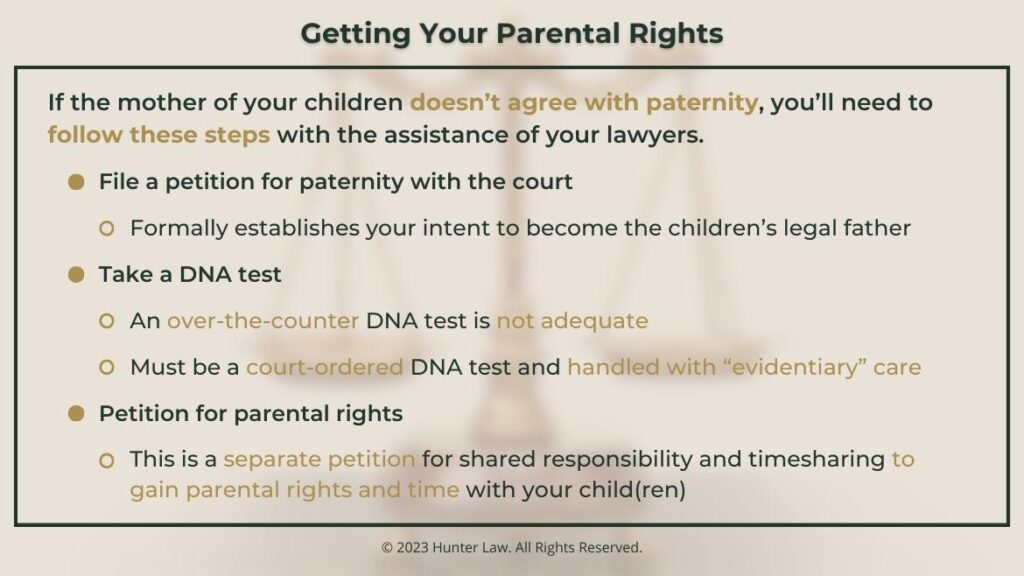
If the mother of your children signs a Voluntary Acknowledgment of Paternity along with you, you’ll establish paternity even for children born out of wedlock. But if the mother of your children doesn’t agree with paternity, you’ll instead need to follow these steps with the assistance of your lawyers.
Fla. Stat. §63.054 provides for the Putative Father Registry in the State of Florida’s Bureau of Vital Statistics. The purpose of the registry is to permit a father who believes he is the unmarried biological father of a child to preserve his right to notice and consent in the event of an adoption. The forms are available on the website, and there is a small fee.
File a Petition with the Court
First, you must file a petition for paternity with the court. This petition formally establishes your intent to become the children’s legal father. The mother can deny that you are the father, but she cannot stop your petition from being filed.
Take a DNA Test
Next, you’ll need to take a DNA test to successfully establish paternity. You cannot establish paternity over children that are not biologically yours if you are not married to their mother (unless you formally adopt them, which will only be possible if the children are 18 or older). If the child’s mother is married to someone else at the time of birth, that is an even more complex social and legal situation.
An over-the-counter DNA test is not adequate. It must be a court-ordered DNA test and handled with “evidentiary” care. Your DNA test will take several weeks or several months to be fully analyzed by a laboratory. Given this fact, you should plan to wait for a significant amount of time before your paternity is established. Your attorneys can help you find a clinic to take a DNA test and ensure you properly fill out all the appropriate paperwork.
Petition for Parental Rights
If your DNA test comes back positive, you have evidence that a court may use to establish paternity. However, you aren’t finished. You must now petition for shared responsibility and timesharing to gain your parental rights and time with your children.
These separate petitions will be reviewed by the court. The court will take various aspects of your circumstances into account, such as:
- Whether you are employed
- Whether you have a safe place to live
You can strengthen your case by working with family law lawyers. They’ll also be able to negotiate for more time with your kids if you want to spend as much time with them as possible.
Contact Tampa Family Law Lawyers Today
No matter your situation or the details, you shouldn’t enter a legal battle over fathers’ rights in Florida without knowledgeable lawyers on your side. At Hunter Law Group, our experienced legal representatives will go to bat for you in court and ensure your paternity rights are honored. Contact us today to learn more.