
A car accident can cause a traumatic brain injury (TBI) or herniated disc without leaving visible wounds. Headaches, memory problems, neck pain, and numbness may appear hours or days later. Proving these injuries requires medical records that connect your symptoms to the collision. A Florida TBI lawyer can help you understand what evidence supports your claim. At Hunter Law, we help injured people in Tampa, Florida, explore their legal options and pursue compensation. Consult with a Florida TBI lawyer at Hunter Law in Tampa, Florida, to discuss your injuries, medical records, and legal options. Call 813-287-2227 or complete our online contact form to take the next step.
Why Are Brain Injuries and Herniated Discs Hard to Prove?
Brain injuries and herniated discs are difficult to prove because symptoms are not always visible, and medical tests may not show their full impact.
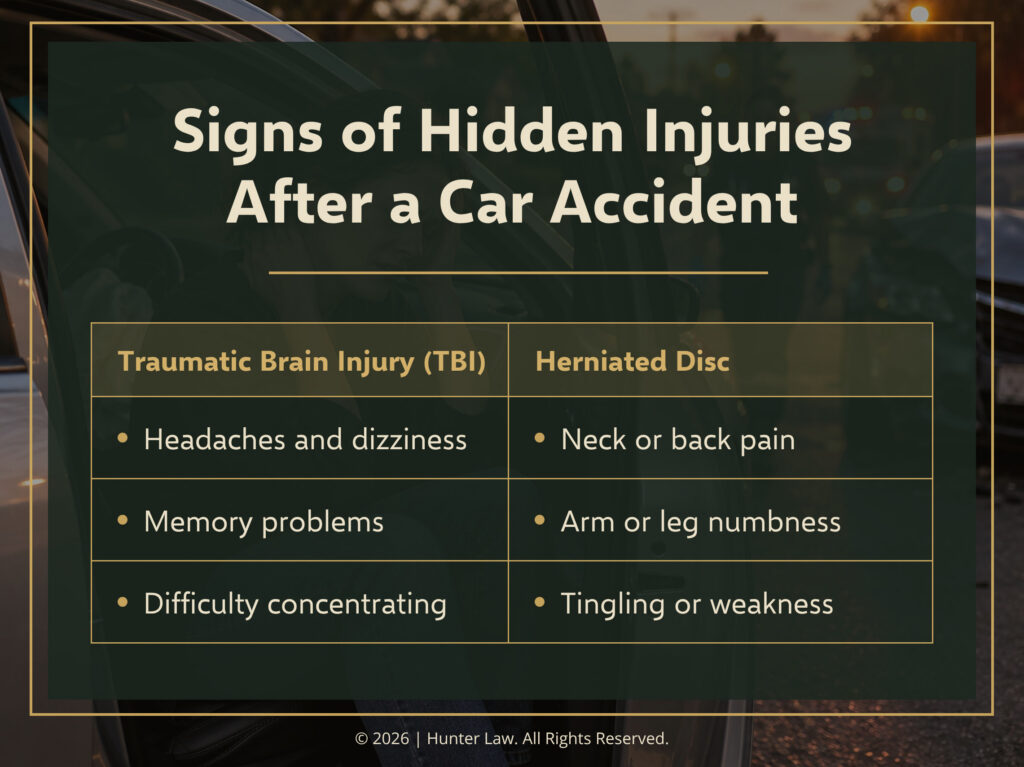
A concussion is a mild traumatic brain injury that can cause headaches, dizziness, memory problems, and difficulty concentrating.
A herniated disc occurs when material inside a spinal disc pushes through its outer covering. A cervical disc injury may cause neck pain and arm numbness, while a lumbar disc injury can cause lower back pain, tingling, or leg weakness.
Medical examinations, symptom records, and treatment history help establish the nature of the injury and its effects.
How to Prove a Traumatic Brain Injury After a Car Accident
To prove a traumatic brain injury, you need medical evidence of the condition, records connecting it to the accident, and documentation of ongoing symptoms.
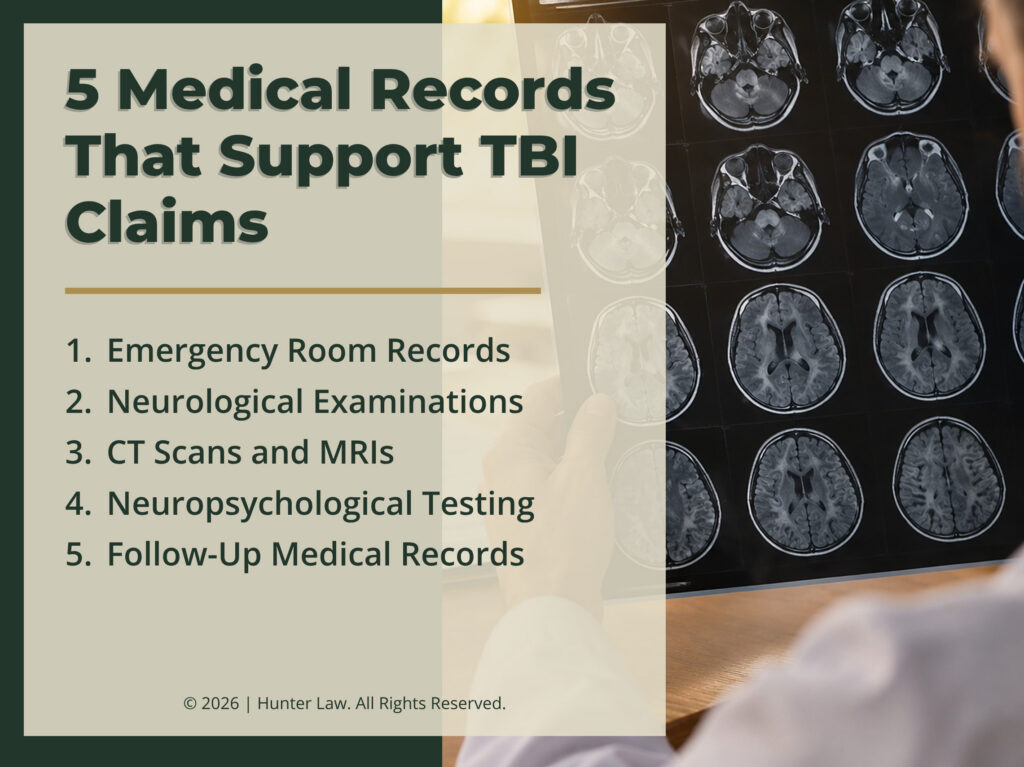
Five types of evidence can support TBI claims:
- Emergency room records: Document initial symptoms and medical findings.
- Neurological examinations: Assess memory, balance, coordination, and reflexes.
- CT scans and MRIs: May identify bleeding or structural brain injuries.
- Neuropsychological testing: Evaluates attention, memory, and cognitive difficulties.
- Follow-up records: Track symptoms, treatment, and recovery.
A normal brain scan does not rule out a concussion. Doctors may diagnose mild TBI based on symptoms, medical history, and clinical examination.
According to the CDC, traumatic brain injuries can affect thinking, emotions, sleep, and physical functioning.
What Evidence Helps Prove a Herniated Disc Injury?
A herniated disc claim requires medical evidence showing the spinal condition and its possible connection to the accident. Herniated discs are among the back and neck injuries after a crash that may require imaging, medical evaluations, and ongoing treatment.
Three records are particularly useful:
- MRI results: Identify disc herniation and possible nerve compression.
- Physical examinations: Document pain, weakness, numbness, and restricted range of motion.
- Treatment records: Show physical therapy, medication, specialist visits, and recovery.
A herniated disc may cause radiculopathy, which involves pain, tingling, or weakness along the distribution of an affected nerve.
However, an MRI alone cannot prove the accident caused the injury. Earlier medical records and medical opinions may help determine whether the collision caused or aggravated the condition.
A herniated disc car accident settlement depends on medical findings, treatment costs, and documented limitations. Hunter Law can help review this evidence and assess your legal options.
How Do You Connect Your Injuries to the Accident?
Connecting injuries to a car accident requires evidence showing when symptoms began and how the collision affected your health. Consistent medical documentation after an injury helps establish when symptoms began and how they affect your daily life.
Important evidence includes accident reports, vehicle photographs, witness statements, initial medical records, and medical opinions addressing causation.
Keep a symptom journal documenting headaches, back pain, fatigue, memory problems, and activities you can no longer perform comfortably.
For example, someone recovering from a concussion may finish a work meeting but experience headaches or difficulty concentrating afterward.
Save medical bills, wage statements, and written work restrictions.
Proving the other driver’s negligence and proving that the accident caused your injuries are separate issues. A personal injury lawyer can review both when building your claim.
What Compensation Can You Recover for Invisible Injuries?
Traumatic brain injury compensation and herniated disc damages depend on medical evidence, financial losses, and Florida law.
Potential compensation includes:
- Medical expenses: Hospital visits, imaging, and rehabilitation.
- Future treatment: Ongoing care supported by medical evidence.
- Lost wages: Income missed during recovery.
- Reduced earning capacity: Long-term work limitations.
- Pain and suffering: Qualifying physical and emotional harm.
Three Florida laws may affect your claim:
14-day PIP requirement: Under Florida Statute § 627.736, eligible accident victims generally must receive qualifying initial medical care within 14 days to access PIP medical benefits.
Injury threshold: Florida Statute § 627.737 requires a qualifying injury to recover certain non-economic damages in covered motor vehicle cases.
Two-year deadline: Florida Statute § 95.11 generally provides two years to file a negligence lawsuit, subject to exceptions.
These requirements serve different purposes and should not be confused.

How Can Hunter Law Help With Your Injury Claim?
Hunter Law can review the circumstances of your accident, your medical records, and your legal options. An accident injuries attorney can help evaluate evidence of brain injuries, herniated discs, treatment costs, and daily limitations.
Consult with a Florida TBI lawyer at Hunter Law to discuss your injuries, available documentation, and possible next steps in Tampa, Florida.